24/7 support

HIPAA Compliance

HIPAA COMPLIANCE STATEMENT


1. Commitment to HIPAA Compliance

Sterling Global Solutions LLC (“Company,” “we,” “our,” or “us”) recognizes the critical importance of safeguarding Protected Health Information (“PHI”) and maintaining strict compliance with the Health Insurance Portability and Accountability Act of 1996 (“HIPAA”).

Our organization is committed to maintaining administrative, technical, and physical safeguards designed to ensure the confidentiality, integrity, and availability of healthcare information entrusted to us by healthcare providers and medical organizations across the United States.

2. Role as a Business Associate

When providing services involving access to Protected Health Information, Sterling Global Solutions LLC operates as a Business Associate as defined under HIPAA regulations.

We provide administrative healthcare support services including:

  • Revenue Cycle Management (RCM)
  • Insurance eligibility verification
  • Prior authorization coordination
  • Claims and billing administrative support
  • Insurance follow-up services
  • Practice workflow assistance

A Business Associate Agreement (BAA) is executed prior to handling PHI whenever required by law or client policy.

In the event of conflict between contractual agreements and this statement, executed agreements shall prevail.

3. HIPAA Regulatory Framework

Sterling Global Solutions LLC aligns its operational practices with applicable HIPAA standards including:

  • HIPAA Privacy Rule
  • HIPAA Security Rule
  • HIPAA Breach Notification Rule
  • Health Information Technology for Economic and Clinical Health (HITECH) Act requirements

Our compliance framework focuses on protecting PHI throughout its lifecycle, including access, transmission, storage, and disposal.

4. Administrative Safeguards

Administrative safeguards are implemented to manage workforce conduct and operational security practices.

These safeguards include:

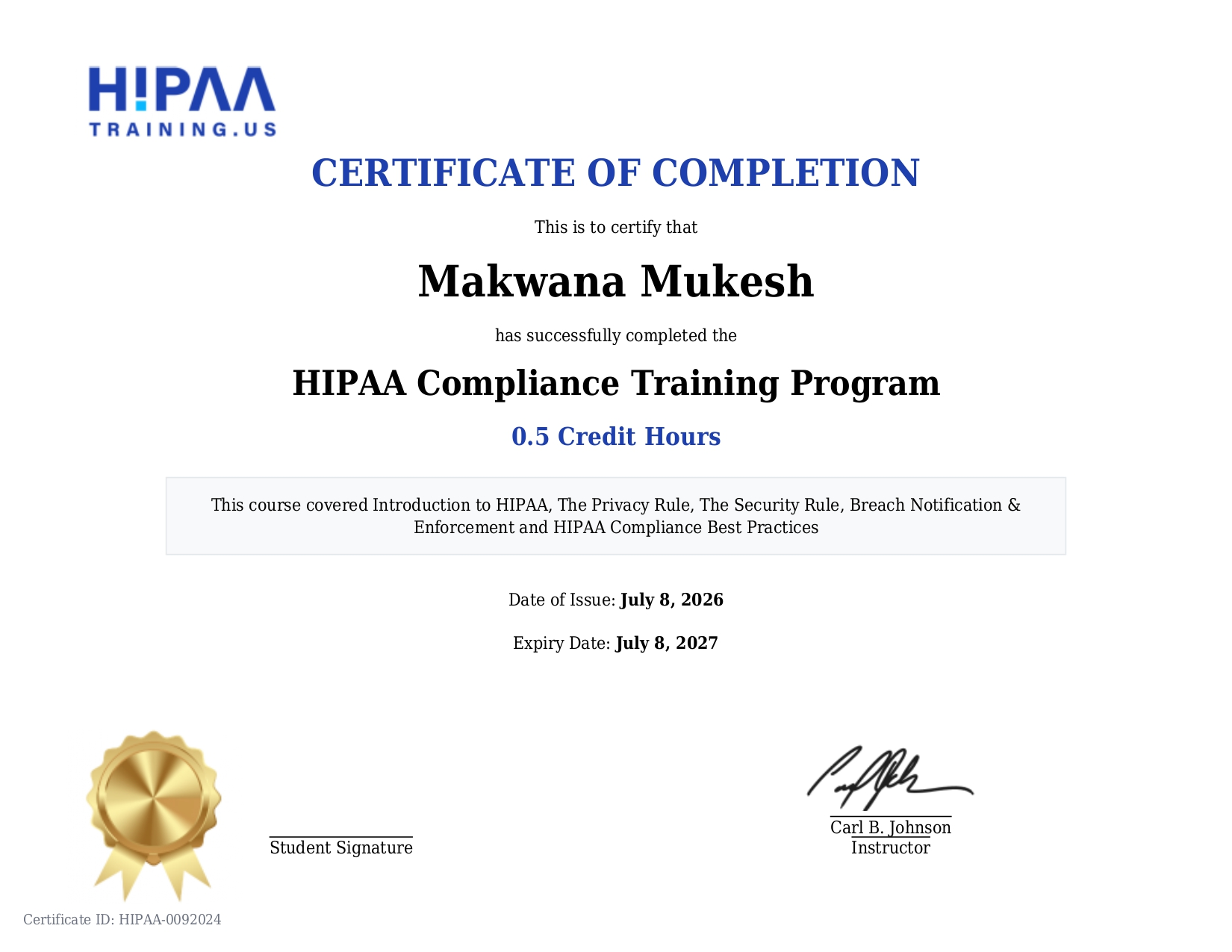
  • Workforce HIPAA awareness and privacy training
  • Defined security responsibilities
  • Authorized access approval procedures
  • Workforce confidentiality agreements
  • Information access management policies
  • Risk awareness practices
  • Incident response procedures
  • Workforce supervision and accountability

Personnel access to healthcare information is granted strictly according to operational necessity.

5. Workforce Training & Awareness

All personnel involved in healthcare administrative operations receive training covering:

  • HIPAA Privacy requirements
  • Data handling responsibilities
  • Confidentiality obligations
  • Secure communication practices
  • Incident reporting procedures
  • Social engineering awareness
  • Access control responsibilities

Training is reinforced periodically to maintain compliance awareness.

6. Technical Safeguards

Sterling Global Solutions LLC employs reasonable technical protections designed to secure electronic Protected Health Information (ePHI).

Technical safeguards may include:

  • Unique user authentication credentials
  • Role-based system access
  • Password protection standards
  • Access logging and monitoring
  • Secure system environments
  • Controlled data transmission practices
  • Session access controls
  • Device security measures

Access privileges are restricted to authorized personnel only.

7. Physical Safeguards

Physical security measures are implemented to protect work environments where healthcare information may be accessed or processed.

Safeguards include:

  • Controlled workstation usage
  • Authorized personnel access restrictions
  • Secure office environments
  • Device usage policies
  • Screen visibility protections
  • Equipment handling controls

Operational environments are structured to minimize unauthorized exposure of PHI.

8. Minimum Necessary Standard

Sterling Global Solutions LLC follows the HIPAA Minimum Necessary Standard, ensuring workforce members access only the information required to perform assigned administrative duties.

Access is limited based on:

  • Job responsibility
  • Client authorization
  • Operational necessity

9. Data Transmission & Communication Security

Healthcare-related communications are handled using secure operational practices intended to reduce unauthorized disclosure risks.

These practices may include:

  • Controlled communication channels
  • Authorized email usage
  • Secure credential handling
  • Restricted data sharing procedures
  • Verified recipient protocols

PHI transmission occurs only when necessary for contracted service delivery.

10. Vendor & Subcontractor Management

Where third-party vendors or technology providers are utilized:

  • Vendors are evaluated for security reliability
  • Access is limited to operational necessity
  • Data protection expectations are contractually enforced where applicable

Sterling Global Solutions LLC maintains responsibility for ensuring subcontractors follow appropriate confidentiality standards.

11. Remote Workforce & International Operations

Sterling Global Solutions LLC may utilize trained administrative personnel operating remotely outside the United States.

All remote operations remain subject to:

  • HIPAA confidentiality expectations
  • Contractual safeguards
  • Workforce supervision
  • Controlled system access

International operational support does not alter HIPAA obligations.

12. Incident Response & Breach Management

The Company maintains internal procedures for identifying and responding to suspected security incidents.

Response procedures include:

  • Immediate investigation
  • Risk assessment
  • Containment measures
  • Documentation of findings
  • Corrective action implementation

If a breach involving PHI is confirmed, notification shall occur in accordance with HIPAA Breach Notification Rule requirements and applicable contractual obligations.

13. Data Retention & Secure Disposal

Healthcare information is retained only for legitimate operational or contractual purposes.

Upon expiration of retention requirements:

  • Data access is revoked
  • Secure deletion procedures are followed
  • Disposal practices reduce risk of reconstruction or unauthorized recovery

Retention timelines may be governed by client agreements.

14. Confidentiality Obligations

All workforce members are bound by confidentiality obligations governing access to healthcare-related information.

Unauthorized disclosure, misuse, or negligent handling of PHI may result in disciplinary action including termination of access or employment.

15. Client Responsibilities

Covered Entities engaging Sterling Global Solutions LLC remain responsible for:

  • Clinical decision-making
  • Patient care delivery
  • HIPAA compliance within their organization
  • Authorization of data shared for services

Our services support administrative operations only.

16. Continuous Compliance Commitment

Sterling Global Solutions LLC maintains an ongoing commitment to improving privacy and security practices through:

  • Operational reviews
  • Workforce awareness reinforcement
  • Process improvements
  • Security monitoring practices

Compliance practices evolve alongside regulatory expectations and operational needs.

17. Compliance Contact Information

For HIPAA or security-related inquiries:

Compliance Officer

Sterling Global Solutions LLC

Email: compliance@sterlingglobalsolution.com

Corporate Address:

30 N Gould St Ste N

Sheridan, WY 82801

United States

18. Availability of Business Associate Agreement

Sterling Global Solutions LLC provides a Business Associate Agreement (BAA) to healthcare providers upon request prior to the commencement of services involving Protected Health Information.

19. Updates to this Statement

This HIPAA Compliance Statement may be updated periodically to reflect regulatory or operational changes.

Revisions will be published with an updated effective date.

20. Organizational Commitment

Protecting healthcare information is fundamental to our operational philosophy.

Sterling Global Solutions LLC remains committed to maintaining responsible administrative healthcare support services aligned with U.S. healthcare privacy and security expectations.